
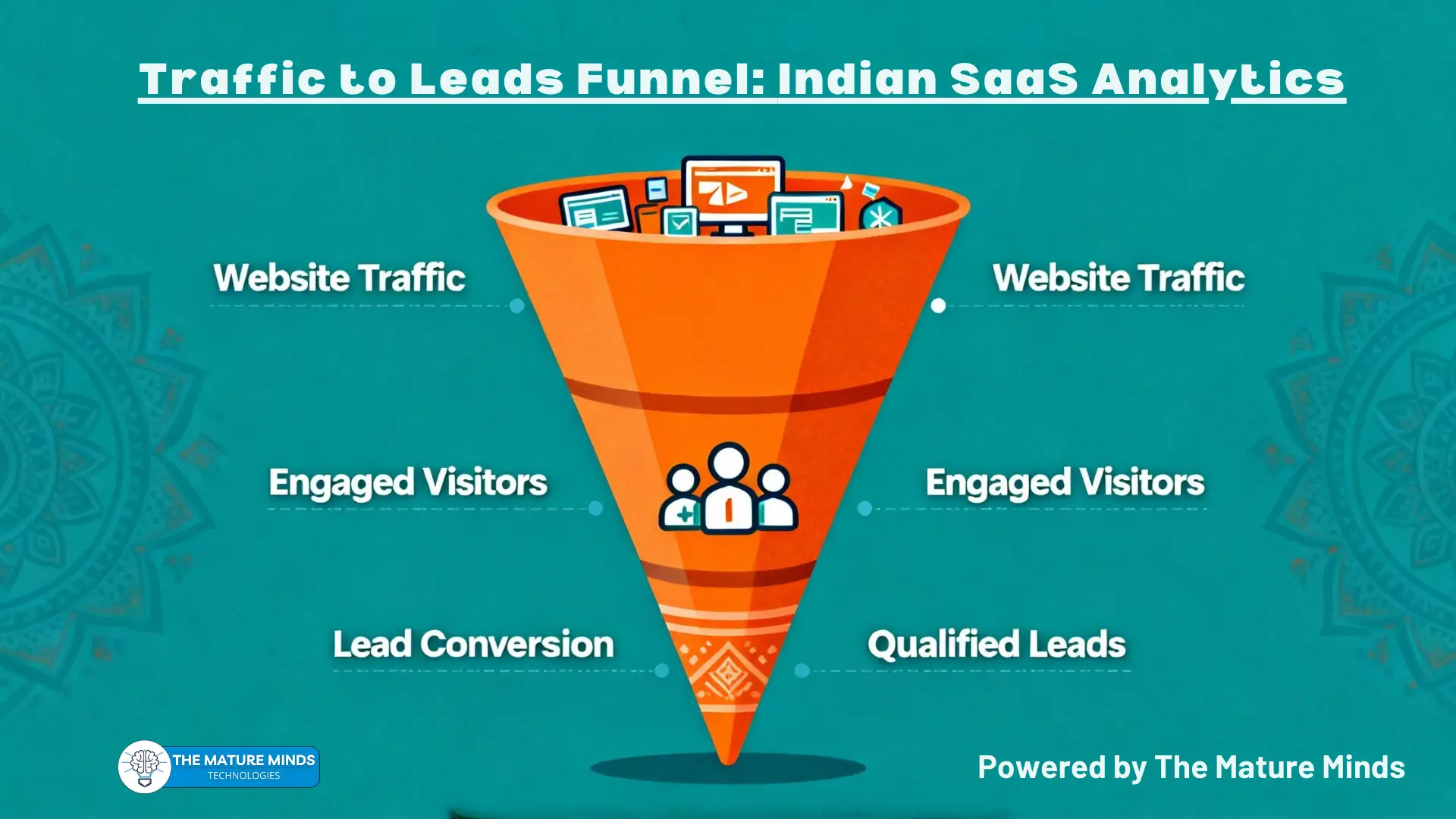
Your website is getting visitors, but your inbox is empty and your pipeline is dry. Analytics looks good, revenue doesn’t. That gap between traffic and leads is where most businesses quietly lose money.
In simple terms:
Your website gets traffic but no leads because you attract the wrong visitors, answer the wrong questions, or make it too hard to take the next step. A smart SEO strategy fixes this by aligning keywords with buyer intent, improving your offer and UX, and optimizing every page for a clear, measurable action.
Quick answer: Why traffic isn’t turning into leads
The Problems:
- Targeting keywords with information intent instead of buying intent.
- Attracting students/researchers instead of decision-makers.
- No clear value proposition above the fold.
- Weak or hidden calls to action.
The SEO Fix:
- Choosing keywords that match real buying stages.
- Designing pages for one main goal (call, demo, quote).
- Using trust signals to reduce friction.
- Measuring everything—then improving based on data.
What “traffic but no leads” really means
When your site gets traffic but doesn’t generate leads, it usually means:
- Search engines like your content enough to rank it.
- Humans don’t see enough value or relevance to take action.
That’s actually good news. Ranking is the harder half of the battle. Now the job is to attract the right visitors and give them the right next step. SEO isn’t just about ranking. Modern SEO is about getting the right people to the right page with the right message at the right moment.
Main reasons your website gets traffic but no leads
1. You’re attracting the wrong traffic
Not all traffic is created equal. Ranking for broad or “cool” keywords can look impressive but bring in the wrong people.
Typical Issues
- Keywords are too broad (e.g., "what is CRM").
- Attracting students or DIYers.
- Ranking for problems you don't solve.
How to spot it
- High traffic, low time-on-page.
- High bounce rate.
- Leads are unqualified or price-sensitive.
2. Your value proposition isn’t clear in 5 seconds
Most visitors decide in a few seconds whether to stay or leave. If the top section of your page (above the fold) doesn’t instantly answer:
- What do you do?
- Who is it for?
- Why is it better than alternatives?
- What should I do next?
…they leave, no matter how good the rest of the page is.
3. Your CTAs are weak, vague, or hidden
People rarely take action if you don’t clearly tell them what to do. Vague buttons like “Learn more” or burying CTAs at the bottom of the page leads to lost opportunities.
Fix: Use "low-friction" options like a free audit or checklist for visitors who aren't ready to buy yet.
4. Your forms create friction and fear
Even interested visitors hesitate if forms feel like work or risk.
- Too many mandatory fields.
- No explanation of what happens next.
- No privacy reassurance.
5. Your content educates but doesn’t lead anywhere
If you solve a problem but never connect it to your service, you become a free resource, not a business. Educational content must build trust and gently move readers toward a suitable next step.
6. Visitors don’t trust you enough yet
Without testimonials, case studies, logos, or guarantees, people rarely convert on first contact. If your design looks outdated or abandoned, trust plummets.
7. UX and technical issues quietly kill conversions
Slow load times, layout shifts, and poor mobile experiences are conversion killers. Google favors fast, stable sites because users do.
8. You aren’t measuring what matters
Without conversion tracking, you are guessing. You need to know which pages bring in leads to treat SEO as a systematic conversion engine.
How smart SEO turns visitors into leads
Intent-driven keyword strategy
Stop chasing traffic. Map keywords to buyer stages. Use TOFU (Top of Funnel) content to warm up visitors, and prioritize commercial intent for service pages.
Align pages with conversion goals
Every page needs one main job. Service pages should sell, case studies should prove, and blog posts should guide users to the next step.
Conversion-focused on-page SEO
Write headlines that state outcomes, not just features. Use strategic internal links to guide visitors deeper into your funnel.
Offers tailored to intent
Not everyone is ready for a sales call. Offer checklists for early research and free audits for those closer to buying.
Build E-E-A-T and Trust
Showcase expertise and authority with real author bios, detailed case studies, and third-party reviews.
Pro Tip
"Over time, your site becomes less of an online brochure and more of a predictable lead-generation engine."
Step-by-step: What to do next
Audit your top pages
Identify top 10–20 pages. Ask: Who is this for? What is the CTA?
Check intent alignment
Do keywords match buying intent? Update content and links to match.
Fix your value prop
Rewrite "above the fold" sections. Clearly state benefits and outcomes.
Simplify forms & Trust
Remove non-essential fields. Add testimonials near your CTAs.
Implementing just these steps will usually increase conversions without needing more traffic.
Frequently Asked Questions
Can SEO really generate high-quality leads?
Yes. When SEO focuses on intent, offer clarity, and conversion paths, it consistently brings in leads who are already problem-aware and solution-seeking.
How long does it take to see results?
If your site already has traffic, you can often see conversion improvements within 2–8 weeks after on-page, UX, and offer changes—even before rankings move much.
Do I still need paid ads if I have strong SEO?
Not necessarily, but many businesses use both. SEO builds a long-term, compounding source of leads. Paid ads can fill gaps or accelerate testing of messages and offers.
What’s the first thing to fix if I’m overwhelmed?
Start with your top 3–5 most visited pages. Improve the value proposition, add a clear CTA, and ensure the page is fast, mobile-friendly, and trustworthy.
Ready to turn traffic into revenue?
Stop letting leads slip through the cracks. Get your free website audit today.